
Peach Hills | A Regenerative Master-Planned Community
Peachland, B.C
• Comprehensive Development Zoning Achieved (CD-10 District of Peachland Zoning Bylaw)
• 125-Acre Regenerative Master-Planned Community
• Indigenous Partnership & Shared Prosperity Framework Actively Being Advanced
• A Total Development Allowance of up to 2,800 Residential Units & 305,000 SF Commercial, Tourism & Institutional Uses
• Conservative Phased Development Strategy Integrating Staged Infrastructure Delivery, Controlled Residential Absorption, and Early Activation of Commercial & Community Anchors
• Human-Scaled, Walkable & 15-Minute Community Design
• Circular Economy & Long-Term Sustainability Principles
• Diverse Housing Mix Supporting All Stages of Life
• Affordable & Attainable Housing Integrated Throughout the Community
• Active Adult, Seniors, Independent Living & Workforce Housing Integration
• Medical, Wellness, Education, Hospitality & Tourism Districts
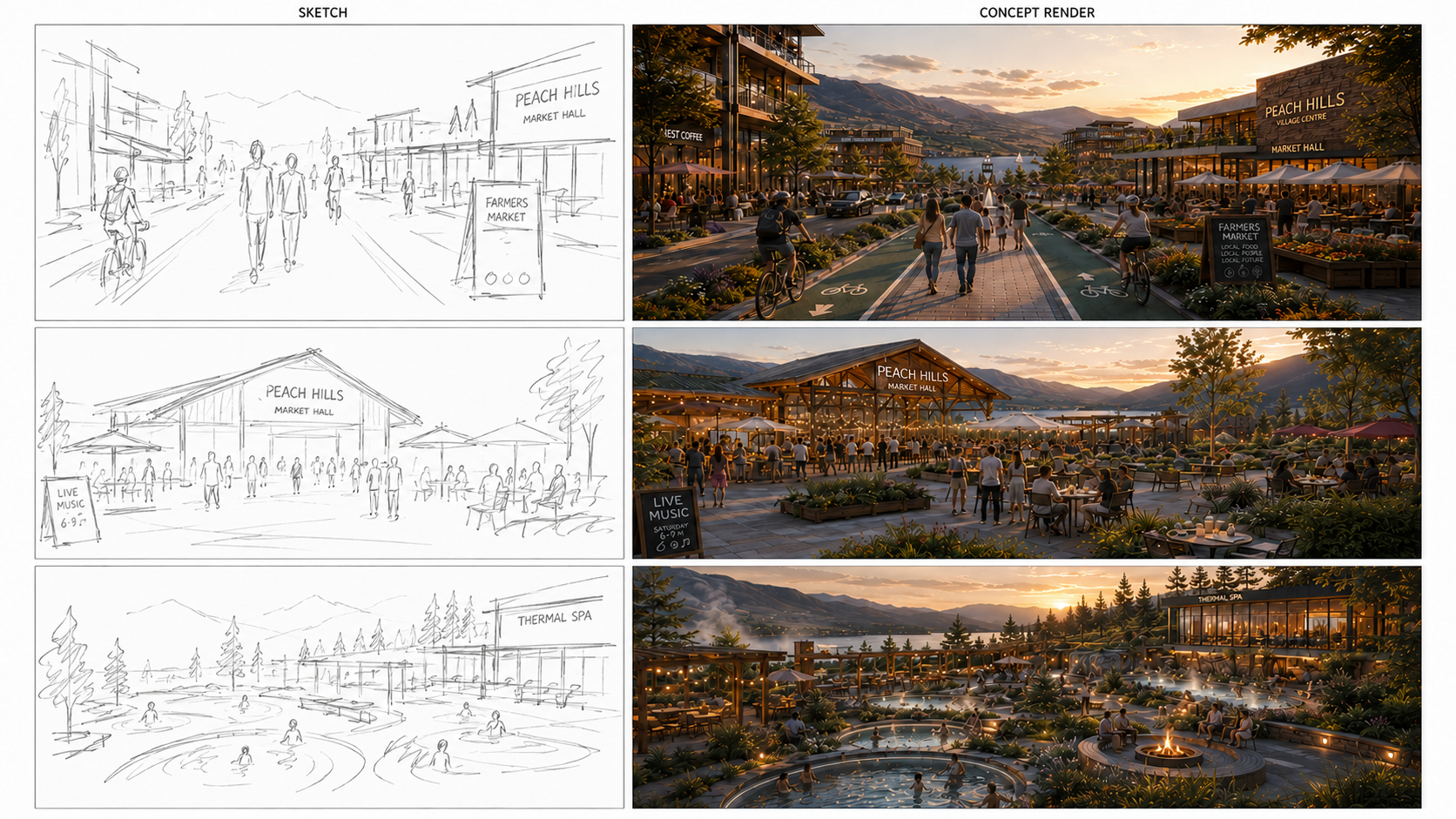
• Signature Artisan Market & Village Centre
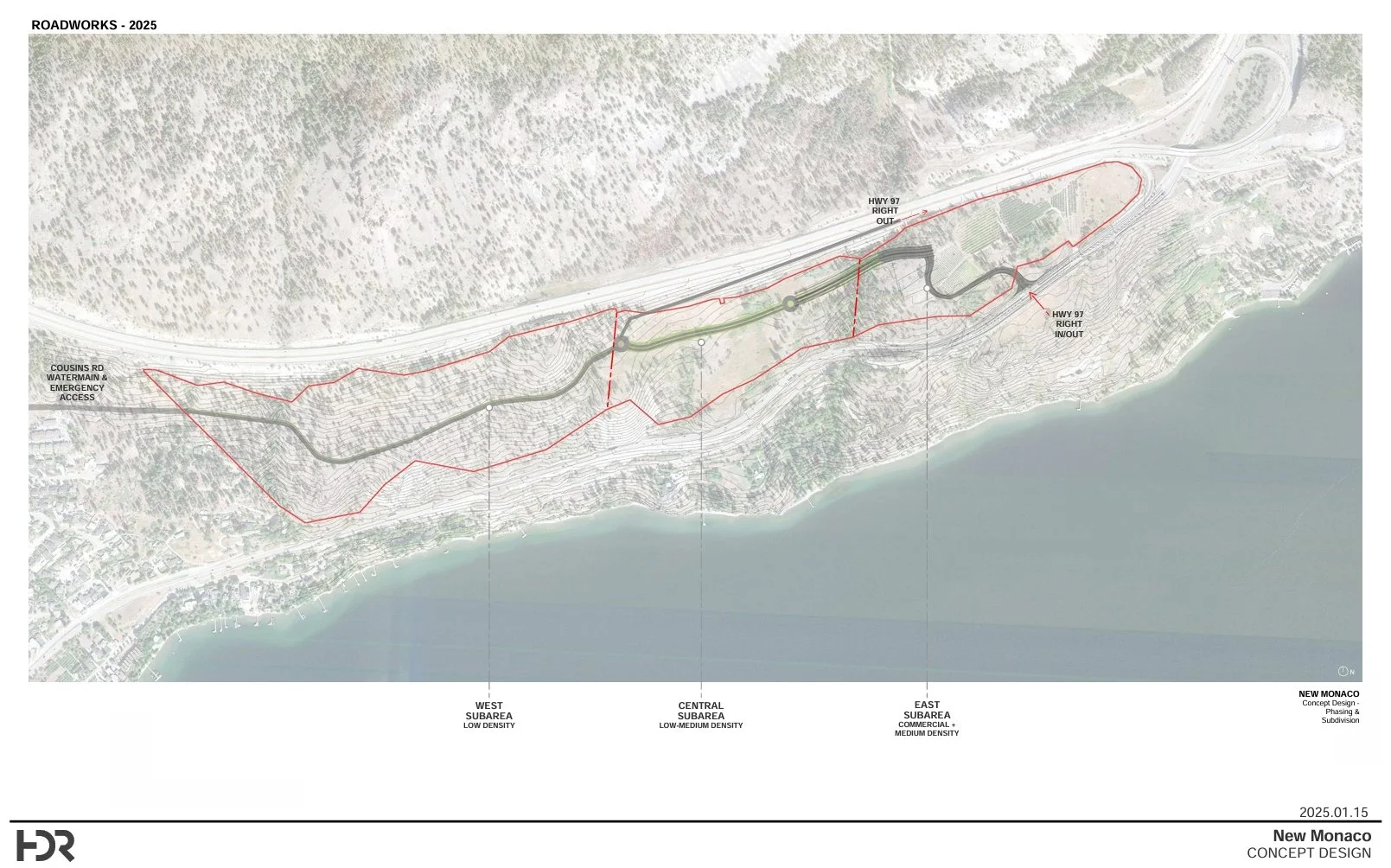
• Highway 97 & Highway 97C Interchanges Approved
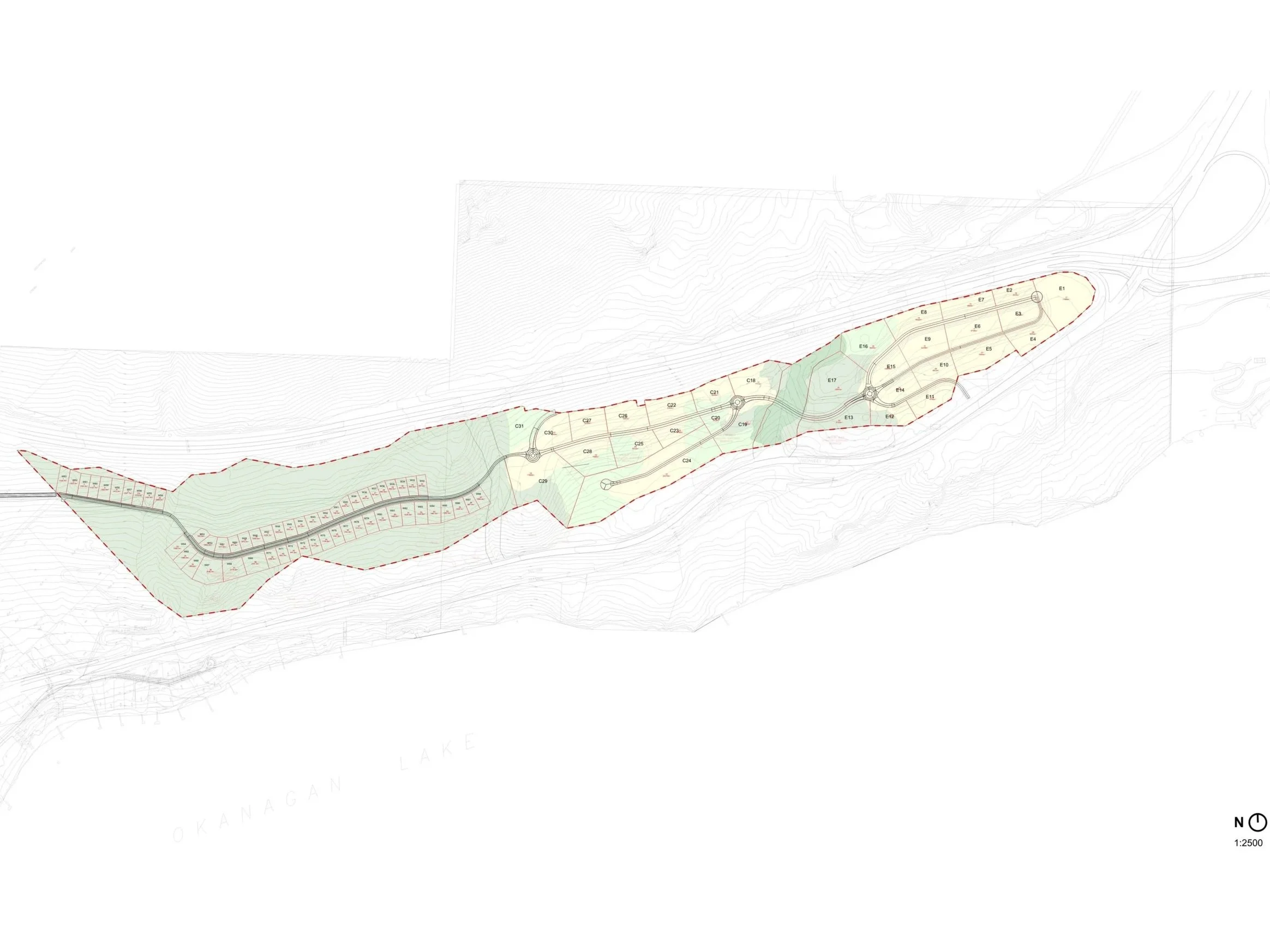
• Subdivision Plan Completed
• Core Infrastructure & Utility Systems Designed
• District-Scale Sustainable Infrastructure Planning
• Environmental Stewardship & Preservation of Sensitive Natural Areas
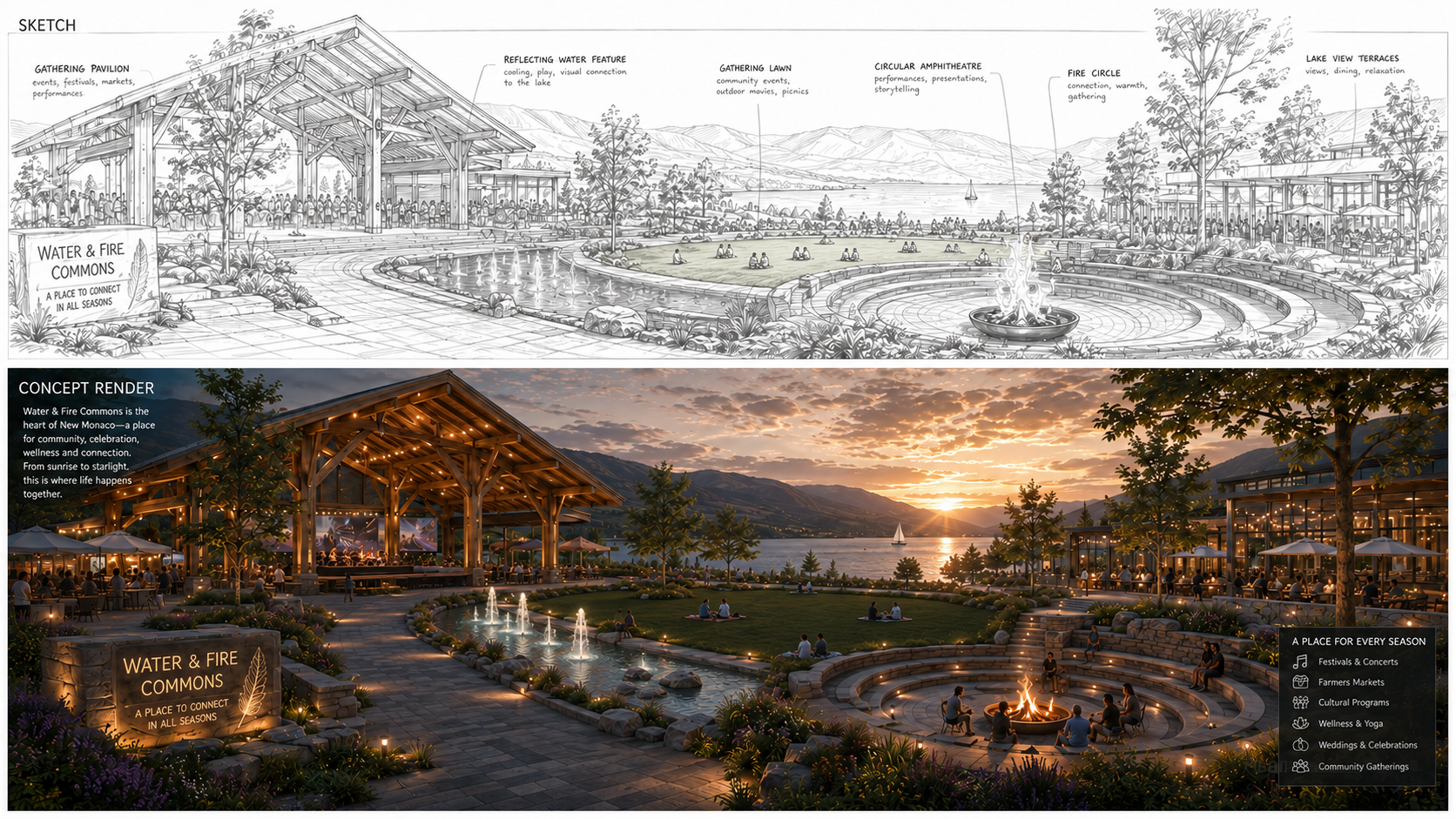
• Significant Open Space, Trail Networks & Community Amenities
• Okanagan Lake Hillside Setting with Protected View Corridors
• Development Framework Aligned with ESG, Community Wellness & Long-Term Resilience Principles
Peach Hills represents a new generation of master-planned community development—one that places people, wellness, sustainability, and long-term community resilience at the centre of the planning process.
Set within the dramatic natural topography overlooking Okanagan Lake, Peach Hills has been carefully designed to work with the land rather than against it. Environmental stewardship has been embedded into the development framework through the preservation of environmentally sensitive areas, the protection of natural ecosystems, and a deliberate reduction of development intensity in key locations to maintain the integrity of the landscape and its ecological function.
Guided by the principles of human-scaled design, walkability, and 15-minute urbanism, Peach Hills is envisioned as a complete community where residents can live, work, learn, access services, and recreate within a connected and highly accessible environment.
The community integrates a diverse range of housing options, wellness-oriented amenities, educational opportunities, tourism and hospitality uses, and a vibrant mixed-use village centre designed to foster social connection, economic opportunity, and community engagement.
From district-scale infrastructure and integrated utility planning to wellness programming, preventative health services, and extensive connections to nature, every aspect of the community has been designed with long-term stewardship and resilience in mind.
More than a development, Peach Hills is intended to demonstrate how thoughtful planning, environmental responsibility, wellness integration, and community-building can come together to create a place where people of all ages and backgrounds can truly live well.
The Live Well Partnership
Live Well Developments partnered with New Monaco Developments Corp. to help further refine and advance the Peach Hills vision through a comprehensive community development framework focused on long-term sustainability, wellness integration, financial resilience, and shared prosperity.
Drawing upon expertise in master-planned communities, financial modelling, market absorption analytics, ESG integration, infrastructure planning, and multi-asset-class development, Live Well has worked alongside the ownership group to optimize the project's long-term economic, social, and environmental performance.
This work has included the refinement of development phasing, infrastructure sequencing, residential and commercial asset class positioning, community wellness integration, housing affordability strategies, sustainable utility planning, and long-term community resilience initiatives.
A key focus has been ensuring that Peach Hills functions as a complete community from its earliest phases of development. This includes the deliberate integration of commercial, wellness, tourism, educational, and community-serving uses alongside residential development, creating a vibrant and economically sustainable community rather than a traditional bedroom subdivision.
Beyond traditional development planning, Live Well has helped embed principles of regenerative design, environmental stewardship, circular economy thinking, human-scaled urbanism, and 15-minute community design throughout the broader development framework.
Perhaps most importantly, Live Well has been leading efforts to establish meaningful Indigenous participation within the project. The objective is not simply consultation, but the creation of long-term partnerships that provide opportunities for cultural integration, economic participation, business development, stewardship initiatives, employment creation, and shared prosperity.
The result is a collaborative development model that seeks to balance environmental responsibility, economic performance, community wellbeing, Indigenous partnership, and long-term community resilience—creating a stronger and more sustainable community for future generations.
-
![]()
02
-
![]()
03
-
![An image of Greenspacing.]()
01